Section 1: Core Logistics & Choosing a Service
Q1: What is the structural difference between car transport, bike shifting, and standard packers and movers in Gurgaon?
While these terms are often thrown around interchangeably, choosing the wrong service structure directly impacts both safety and price:
- Dedicated Car Transport: Utilizes specialized multi-car open carriers or specialized single-car enclosed trailers. These are designed exclusively for four-wheelers with built-in tire-chocks, over-wheel tie-down straps, and low-angle hydraulic ramps.
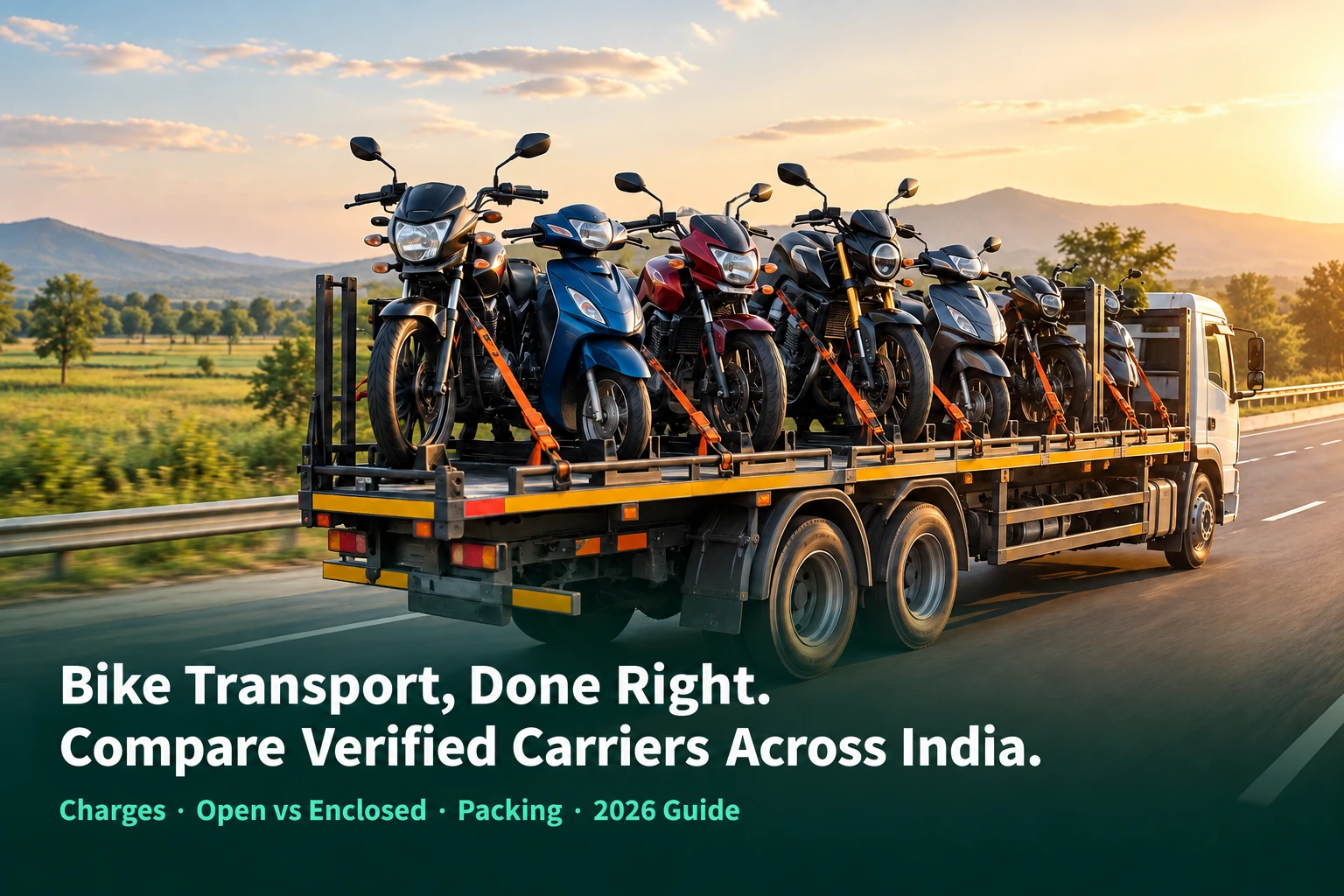
- Specialized Bike Shifting/Courier Platforms: Moves two-wheelers in smaller, closed container tempos or via secure railway cargo networks. They use specialized padding blocks to secure motorcycle frames without putting stress on the front forks or handlebars.
- Packers and Movers (Integrated Relocation): Best suited when you are moving an entire household. They secure your vehicles alongside your furniture in a shared container or arrange a dedicated carrier.
Q2: How do I choose between an Open Car Carrier and an Enclosed Car Trailer on the Gurgaon-Delhi route?
Your choice depends on the market value of your vehicle, the season, and the distance. Open car carriers are the industry workhorse—they load up to 8 vehicles and are highly cost-effective but leave your car exposed to highway dust and unpredictable weather. Enclosed trailers are specialized single-unit containers that offer complete protection from road debris, extreme heat, and heavy rain.
For standard daily commuters, open carriers are highly efficient. However, for luxury sedans, premium SUVs, or high-performance electric vehicles (EVs) moving through heavy transit corridors, enclosed shipping is strongly recommended.
Section 2: Rate Architecture & Hidden Costs
Q3: What are the current baseline costs for car transport from Gurgaon to major Indian cities?
Vehicle transport rates fluctuate based on vehicle dimensions, weight, and terminal distances. Below is a baseline market estimate for standard open vs. enclosed transport setups:
| Destination from Gurgaon | Hatchback / Small EV (Open) | Sedan / Mid-SUV (Open) | Premium Luxury / Large SUV (Enclosed) | Expected Transit Timeline |
| Delhi-NCR (Local) | ₹3,500 – ₹5,000 | ₹5,000 – ₹7,500 | ₹12,000 – ₹16,000 | 1 — 2 Days |
| Mumbai | ₹9,500 – ₹12,000 | ₹13,000 – ₹16,500 | ₹24,000 – ₹32,000 | 4 — 6 Days |
| Bangalore | ₹12,500 – ₹15,500 | ₹16,000 – ₹21,000 | ₹28,000 – ₹38,000 | 5 — 7 Days |
| Kolkata | ₹11,000 – ₹14,000 | ₹15,000 – ₹19,500 | ₹26,000 – ₹35,000 | 5 — 7 Days |
Q4: What is the estimated cost breakdown for bike transport from Gurgaon?
Two-wheeler relocation pricing is primarily determined by engine displacement (cc) and the weight profile of the chassis:
- Commuter Bikes & Scooters (100cc – 150cc): Local NCR moves cost between ₹2,000 and ₹3,500. Long-distance interstate transport ranges from ₹4,500 to ₹6,500.
- Mid-Segment & Cruisers (150cc – 350cc): Local NCR moves average ₹3,000 to ₹5,000. Interstate lanes cost between ₹6,000 and ₹8,500.
- Premium Superbikes & Heavy Cruisers (350cc+): Require specialized wooden pallet crates or custom container boxing. Expect base charges between ₹8,000 and ₹15,000 depending on total weight and dimension profiles.
Q5: What are the typical hidden charges associated with vehicle relocation in Haryana?
To prevent sudden invoice inflation on delivery day, ensure your binding quote explicitly clarifies these local line items:
- Green Tax / Octroi / State Border Tolls: Commercial vehicle levies applied at entry borders (such as the MCD toll plaza on the Delhi-Gurgaon border).
- Long-Carry / Feeder Charges: If your apartment complex or corporate sector blocks large 20-foot multi-car carriers from entering, companies must use a smaller towing vehicle to fetch your car, resulting in an auxiliary fee.
- Disassembly Fees for Bikes: Premium wrapping protocols that involve removing rearview mirrors, custom crash guards, or side panniers to protect them from bending.
Section 3: Monsoon & Seasonal Strategy
Q6: What specific precautions must be taken for car transport during the Gurgaon monsoon season?
The monsoon season drastically alters logistics safety across Gurugram, Ghaziabad, and Noida. Waterlogging hotspots on NH-48, around Hero Honda Chowk, and along IFFCO Chowk present severe challenges.
1. Pre-Loading Mechanical Inspection: Phase 1: Deep Underbody & Seal Check.
Examine door rubber beadings and windows to ensure they are fully watertight. Clean the undercarriage to prevent any trapped road grime from hardening into rust during high-humidity transit.
2. Battery & Security Safeguards: Phase 2: Component Deactivation.
Disconnect external accessories and turn off the vehicle's stock anti-theft alarms. Continuous vibration on rain-slicked roads can repeatedly trigger alarms, completely draining the car's primary battery.
3. Waterproof Layer Application: Phase 3: Material Shielding.
If utilizing an open carrier, verify that the vehicle is wrapped with a heavy-duty, breathable, waterproof car cover. Avoid cheap plastic sheets that trap condensation against the bodywork, as this can damage the paint.
4. Post-Delivery Moisture Check: Phase 4: Immediate Arrival Audit.
Inspect the footwells and the spare wheel compartment immediately upon delivery to catch any internal cabin water ingress before mold can form.
Q7: How do I protect my motorcycle from rust and damage during rainy-season shifting?
Always opt for enclosed container transit during monsoon months. Before handing your bike over to the packers, make sure the fuel tank is drained to less than 15-20% capacity. Wipe down metal surfaces with an anti-rust spray, and ensure delicate areas like the digital instrument console, exposed drive chains, and exhaust pipe openings are tightly sealed with industrial-grade bubble wrap and stretch film.
Section 4: Legal Compliance & Local NCR Mandates
Q8: What exact paperwork is required for interstate vehicle transport out of Gurgaon?
The Regional Transport Authority (RTA) and inter-state border checkpoints enforce strict documentation rules. You must hand over clear photocopies of these documents to your driver:
- Registration Certificate (RC Card): Valid proof of vehicle ownership.
- Valid Insurance Policy Document: Must show active third-party and own-damage coverage.
- Pollution Under Control Certificate (PUC): Must be fully updated.
- Owner’s Identification: A government-issued ID card.
- No Objection Certificate (NOC) from Financer: Mandatory only if the vehicle is currently under an active bank loan/hypothecation.
Q9: What are the latest 2026 CAQM and Haryana transport regulations regarding commercial moving fleets?
The Commission for Air Quality Management (CAQM) enforces stringent vehicle age limitations across the NCR. Commercial transport vehicles running on diesel must strictly follow the age cutoffs (BS-IV commercial restrictions and the phased migration toward clean energy).
Furthermore, all local delivery and aggregator fleets must operate on CNG or electric options. When booking your move, ensure your provider's trucks carry a valid, digitally updated PUC certificate. This prevents unexpected vehicle impounding at border checks under the latest "No PUC, No Fuel/No Border Transit" enforcement guidelines.
Q10: How do I handle legal vehicle re-registration if relocating permanently to another state?
If you are moving your vehicle permanently, you must apply for a formal inter-state vehicle migration NOC from the Gurugram RTO (HR-26 or HR-55). This requires submitting RTO Form 28 along with a pencil chassis print.
Once your vehicle arrives in the destination state, you have a 12-month window to pay the localized pro-rata Road Tax and complete the new registration process via Forms 29 and 30.
Section 5: Risk Management & Vetting Partners
Q11: Can I pack personal household belongings or extra luggage inside my car during transport?
No, this practice is strongly discouraged by all licensed transport lines. Loose luggage stored on seats can shift abruptly during highway transit, shattering side windows or tearing internal roof liners.
Furthermore, commercial carriers operate under strict weight declarations at state toll checkpoints. Carrying undeclared personal goods inside a transported vehicle can lead to heavy fines and delays for the entire carrier truck.
Q12: How do I verify if a Gurgaon car packer and mover company is genuine or a fake clone?
The NCR moving market faces major challenges with fraudulent operators setting up copycat websites using minor spelling variations of leading logistics brands. Protect your assets by following this strict verification routine:
- Verify the GSTIN: Enter their 15-digit GST number directly into the official Government GST Portal. Confirm that the legal registration name matches their invoice header and that their operational status is "Active."
- Check the Physical Infrastructure: Avoid brokers who operate solely via mobile phones. Request a live video walk of their warehouse yard or visit their physical office location in transport hubs like Sector 34 or Bilaspur.
- Look for IBA Approval: If you are moving due to a corporate or public sector transfer, prioritize Indian Banks' Association (IBA) approved transporters, as they undergo rigorous background audits.
Q13: How does transit insurance work, and what should I look for in the policy document?
Never rely on a mover’s verbal assurance that your vehicle is "fully covered." A legitimate transit insurance setup requires the provider to collect a premium fee (usually 1% to 3% of the vehicle’s declared current IDV) and issue an independent insurance policy certificate. This certificate must be issued by an IRDAI-registered insurance company with your name listed as the primary beneficiary.
Section 6: Execution & Moving Day Strategy
Q14: How many days in advance should I book my vehicle shipment out of Gurgaon?
For standard domestic routes, book your slot at least 7 to 10 days in advance. During peak corporate relocation periods (March to June) or festive season windows, carrier availability drops significantly. Booking early ensures your provider can secure a spot on a primary carrier route, bypassing secondary delays.
Q15: What is the exact step-by-step handover routine I should follow on moving day?
To protect your vehicle and ensure a transparent moving process, follow this final checklist on the day of handover:
- [ ] Wash the Vehicle: Clean your vehicle thoroughly. Layers of surface dust make it difficult to spot minor scratches or paint damage during the initial inspection.
- [ ] Create a Detailed Media Log: Take timestamped, high-resolution photographs and a continuous 360-degree video clip of your car or bike from all angles, paying close attention to the bumpers, rims, and glass panels.
- [ ] Record the Odometer: Document the exact mileage reading and current fuel gauge position on the official consignment note.
- [ ] Remove External Accessories: Detach detachable infotainment screens, expensive dash cams, custom phone holders, magnetic car perfumes, and toll tags.
- [ ] Keep a Quarter Tank of Fuel: Maintain a low fuel level, ideally around a quarter tank. This provides enough fuel for loading and unloading maneuvers while keeping the overall transit weight safe.