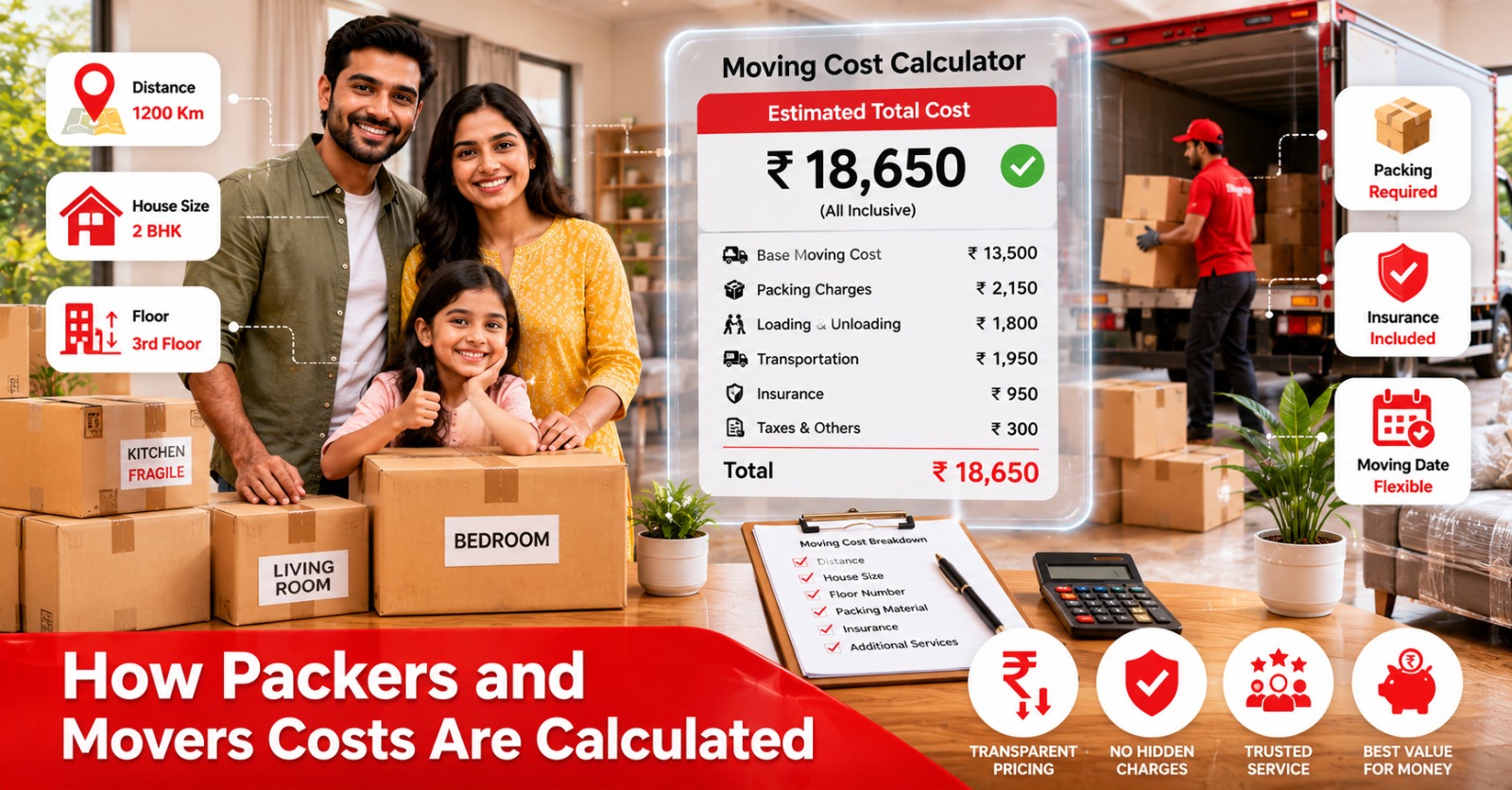
Relocating to a new home can be exciting, but one of the biggest concerns people face is understanding how packers and movers charges are calculated. Whether you are shifting locally within the city or moving to another state, knowing the pricing factors helps you plan your budget and avoid hidden charges.
In this detailed guide, we’ll break down everything that affects packers and movers pricing, common charge structures, cost estimation methods, and practical tips to reduce moving expenses.
What Are Packers and Movers Services?
Packers and movers are professional relocation service providers that help individuals and businesses move goods from one location to another. Their services usually include:
- Packing household items
- Loading goods
- Transportation
- Unloading
- Unpacking
- Furniture assembly/disassembly
- Storage and warehousing
- Vehicle transportation
- Insurance services
The final moving cost depends on several variables, not just the distance between locations.
Main Factors That Affect Packers and Movers Costs
1. Distance Between Pickup and Delivery Locations
Distance is one of the most important pricing factors.
Local Shifting
For moves within the same city, charges are generally calculated based on:
- Number of items
- Labor required
- Vehicle size
- Floor level
Domestic or Intercity Shifting
For long-distance relocation, costs increase due to:
- Fuel charges
- Toll taxes
- Driver expenses
- State permits
- Transit risk
Example
- Local move within 10 km: Lower transportation charges
- Move from Sambalpur to Bhubaneswar: Higher transportation and logistics costs
2. Volume and Weight of Goods
Packers and movers usually estimate pricing based on the volume or weight of your belongings.
The more items you have, the higher the cost.
Items That Increase Moving Costs
- Large furniture
- Refrigerators
- Washing machines
- Wardrobes
- Glass items
- Heavy appliances
- Modular furniture
How Movers Estimate Volume
Most companies conduct:
- Physical surveys
- Video surveys
- Inventory assessments
They calculate:
- Cubic feet (CFT)
- Total shipment weight
3. Type of Packing Materials Used
Packing quality significantly affects pricing.
Common Packing Materials
- Carton boxes
- Bubble wrap
- Foam sheets
- Corrugated sheets
- Stretch film
- Wooden crates
Fragile or expensive items require premium packing, which increases the overall cost.
Example
Basic packing:
- Standard cartons and wrapping
Premium packing:
- Multi-layer bubble wrapping
- Wooden crating for TVs or glass items
Premium packing costs more but offers better safety.
4. Labor Charges
Labor charges depend on:
- Number of workers required
- Time needed
- Complexity of shifting
Situations That Increase Labor Cost
- Heavy furniture
- No elevator access
- Narrow staircases
- Long carrying distance
- Multiple floors
If movers need additional manpower, your cost increases accordingly.
5. Type and Size of Vehicle
Transportation vehicle selection affects pricing directly.
Common Vehicle Types
- Tata Ace
- Pickup trucks
- 14 ft trucks
- 17 ft containers
- Shared trucks
- Dedicated containers
Shared Truck
Cheaper option where multiple customers share vehicle space.
Dedicated Truck
Exclusive truck for one customer. Faster and safer but more expensive.
6. Floor Level and Lift Availability
This is a commonly overlooked factor.
Movers Usually Charge Extra For:
- Upper-floor shifting
- Buildings without lifts
- Small elevators
- Long walking distance from parking
Higher floors require more effort and time.
7. Insurance Charges
Transit insurance protects your belongings from:
- Damage
- Theft
- Accidents
- Fire
Two Common Insurance Types
Transit Insurance
Covers accidents during transportation.
All-Inclusive Insurance
Covers handling damage as well.
Insurance charges are usually calculated as a percentage of declared goods value.
8. Storage and Warehousing
If you need temporary storage, movers charge:
- Daily storage fees
- Weekly charges
- Monthly warehousing costs
Pricing depends on:
- Storage duration
- Volume of goods
- Warehouse location
9. Seasonal Demand
Moving costs fluctuate throughout the year.
Peak Seasons
Charges increase during:
- Summer months
- Month-end dates
- Weekends
- Festival seasons
Off-Season
You may get discounts during:
- Mid-month periods
- Monsoon seasons
- Weekdays
10. Additional Services
Extra services increase the total relocation cost.
Common Add-On Services
- AC installation/uninstallation
- TV mounting
- Furniture dismantling
- Pet relocation
- Vehicle transport
- Deep cleaning
- Appliance handling
Always ask for a detailed breakdown before booking.
How Packers and Movers Estimate Charges
Most companies follow one of these methods:
1. Per Item Pricing
Common for local shifting.
Example:
- Sofa: ₹500
- Bed: ₹800
- Refrigerator: ₹700
2. Weight-Based Pricing
Common for intercity shifting.
Example:
- ₹20–₹40 per kg depending on distance
3. Volume-Based Pricing
Based on cubic feet occupied in the truck.
4. Fixed Package Pricing
Some companies offer all-inclusive packages for:
- 1 BHK
- 2 BHK
- 3 BHK homes
Average Packers and Movers Cost in India
Local Shifting Approximate Costs
| Home Size | Estimated Cost |
|---|---|
| 1 BHK | ₹3,000 – ₹8,000 |
| 2 BHK | ₹5,000 – ₹15,000 |
| 3 BHK | ₹8,000 – ₹25,000 |
Intercity Relocation Approximate Costs
| Home Size | Estimated Cost |
|---|---|
| 1 BHK | ₹10,000 – ₹25,000 |
| 2 BHK | ₹15,000 – ₹40,000 |
| 3 BHK | ₹25,000 – ₹70,000 |
Prices vary based on city, distance, and service quality.
Hidden Charges You Should Watch Out For
Some movers may add extra charges later if details are not clarified beforehand.
Common Hidden Costs
- GST charges
- Toll tax
- Parking charges
- Staircase charges
- Waiting charges
- Unpacking fees
- Insurance fees
- Packaging material upgrades
Always ask for:
- Written quotation
- GST inclusion
- Final invoice breakdown
How to Reduce Packers and Movers Costs
1. Declutter Before Moving
Sell or donate unused items.
Less volume = lower cost.
2. Compare Multiple Quotes
Get at least 3 quotations from different movers.
3. Move During Off-Peak Days
Weekdays and mid-month dates are usually cheaper.
4. Do Partial Packing Yourself
Packing clothes and books yourself can reduce labor costs.
5. Choose Shared Transportation
For smaller shipments, shared trucks save money.
Questions to Ask Before Hiring Packers and Movers
Before finalizing a company, ask:
- Is GST included?
- Are packing materials included?
- What type of insurance is offered?
- Is there any extra charge for stairs?
- Will goods be moved in a shared or dedicated vehicle?
- What happens if items are damaged?
- Are unloading and unpacking included?
Importance of Getting a Pre-Move Survey
Professional movers usually conduct:
- Home inspection
- Inventory listing
- Video survey
This helps provide:
- Accurate quotation
- Better planning
- Reduced surprise charges
Avoid companies that provide unrealistically low estimates without inspection.
Why Packers and Movers Prices Vary Between Companies
Different movers use different pricing structures based on:
- Brand reputation
- Service quality
- Packing standards
- Vehicle ownership
- Insurance coverage
- Experience level
Cheaper is not always better.
Low-cost movers may compromise on:
- Packaging quality
- Safety standards
- Delivery timelines
Final Thoughts
Packers and movers costs are calculated using multiple factors including distance, volume of goods, labor requirements, packing quality, vehicle type, and additional services.
Understanding these cost components helps you:
- Plan your relocation budget
- Avoid hidden charges
- Compare quotations effectively
- Choose the right moving company
Before booking any relocation service, always request a detailed written estimate and verify all included services.
A transparent pricing structure and professional handling are more important than simply choosing the cheapest option.
Frequently Asked Questions (FAQs)
How do movers calculate shifting charges?
Movers calculate charges based on distance, volume of goods, labor, packing materials, vehicle size, and additional services.
Are packers and movers negotiable?
Yes, many movers are open to negotiation, especially during off-season periods.
Is insurance mandatory during relocation?
Insurance is optional but highly recommended for long-distance or high-value moves.
Why do movers conduct home surveys?
Home surveys help estimate goods volume, manpower requirements, and transportation needs accurately.
Which is cheaper: shared truck or dedicated truck?
Shared trucks are cheaper because transportation costs are divided among multiple customers.
Do movers charge extra for upper floors?
Yes, additional charges may apply if there is no elevator or if goods must be carried manually over multiple floors.